


Description
Product Overview
Boitempo Editorial presents a definitive Kindle eBook that delves into the multifaceted discipline of economic development, offering readers a comprehensive roadmap from foundational concepts to advanced analytical frameworks. Spanning 701 meticulously organized pages, the volume combines theoretical exposition with empirical case studies drawn from emerging markets, established economies, and policy experiments worldwide. Published in July 2023, the text reflects the latest research trends, data‑driven insights, and policy debates that shape contemporary development economics. Written in Portuguese, the eBook leverages enhanced typesetting and screen‑reader compatibility to ensure an accessible reading experience across devices, while the integrated page‑flip feature mimics the tactile sensation of turning pages, reducing eye strain during extended study sessions. The digital format also supports dynamic features such as searchable text, hyperlink‑enabled footnotes, and the ability to export highlighted passages for offline review. By integrating these modern functionalities, the book not only serves as a static reference but also as an interactive learning tool that adapts to the needs of scholars, practitioners, and students alike. The eBook’s design incorporates responsive layout that automatically adjusts to portrait or landscape orientation, ensuring optimal readability on both small smartphones and larger tablets. Additionally, the inclusion of a built‑in dictionary allows instant translation of technical terms, facilitating bilingual study for non‑native speakers. The publisher has also embedded a comprehensive bibliography that links directly to open‑access sources, enabling readers to explore original research without leaving the Kindle environment. Overall, this resource positions itself as an essential companion for anyone seeking to understand the drivers of sustainable economic growth.
The book’s structure is divided into four major parts: foundational theory, sectoral analysis, policy instruments, and future outlook. Each part begins with a concise summary that highlights key takeaways, followed by detailed chapters that explore topics such as growth determinants, industrial policy, human capital investment, infrastructure financing, and the role of institutions in shaping development trajectories. Rich visual elements, including charts, tables, and infographics, are embedded throughout the eBook to illustrate complex data sets and to support visual learners. The inclusion of a searchable index and hyperlink‑enabled references enables scholars to quickly locate specific concepts, making the work an indispensable tool for coursework, research projects, and professional briefings. Moreover, the eBook provides interactive exercises at the end of each chapter, allowing readers to test their comprehension and apply quantitative methods to real‑world scenarios. The supplemental bibliography, featuring over three hundred peer‑reviewed articles and policy documents, offers pathways for deeper investigation and encourages interdisciplinary exploration. Finally, a bilingual glossary of key terms in Portuguese and English assists readers in mastering discipline‑specific vocabulary, fostering greater accessibility for international audiences. The authors also provide a series of case studies that illustrate successful development strategies in regions such as Southeast Asia, Sub‑Saharan Africa, and Latin America, enabling readers to draw parallels with their own contexts. Throughout the text, sidebars highlight policy implications and actionable recommendations, bridging the gap between theory and practice. This comprehensive approach ensures that the eBook serves not only as an academic reference but also as a practical guide for decision‑makers seeking evidence‑based solutions.
![[Product front view showing all components]](https://www.supplementrx.store/wp-content/uploads/2026/06/733ade4e3fbd48e8984d859b30a0910c.jpg)
Usage
Designed for a diverse audience, this eBook serves undergraduate and graduate students in economics, business, public policy, and international development, as well as professionals employed by government ministries, NGOs, consulting firms, and multinational corporations. The practical frameworks presented enable users to assess development challenges, design evidence‑based interventions, and communicate findings to stakeholders with clarity. The digital format allows readers to annotate passages, export excerpts, and integrate the material into learning management systems, facilitating collaborative study groups and classroom discussions. For busy professionals, the ability to adjust font size, switch to night mode, and synchronize reading progress across devices ensures that the content remains accessible during commutes, travel, or fieldwork. Moreover, the eBook’s compatibility with screen readers guarantees that visually impaired readers can access the full breadth of content without loss of information, reinforcing the publisher’s commitment to inclusive education. Students can incorporate the eBook’s case studies into term papers, while instructors may assign specific chapters as required reading, leveraging the built‑in quiz feature to assess comprehension. Corporate trainers can use the material to align sustainability initiatives with economic development principles, fostering a shared understanding across departments. The Kindle platform’s cloud‑based storage also ensures that annotations and highlights are preserved indefinitely, allowing users to build a personal knowledge repository that grows over time. Overall, the eBook’s flexible delivery and interactive tools make it a valuable resource for continuous professional development and academic success. Its compatibility with citation management software further streamlines the process of integrating references into scholarly work.
Because the Kindle version supports adjustable font sizes, night‑mode reading, and seamless synchronization across devices, it is equally suitable for on‑the‑go professionals who need to review chapters during commutes, as well as for scholars conducting in‑depth literature reviews at their desks. The eBook’s compatibility with screen readers also ensures that visually impaired readers can access the full breadth of content without loss of information. In addition, the built‑in citation tool simplifies the process of referencing specific sections in academic papers, reports, and policy briefs. Educators can assign specific chapters as required reading, embed the eBook’s interactive elements into online course modules, and track student progress through Kindle’s classroom integration tools. The ability to highlight passages and add personal notes creates a personalized study guide that can be exported as PDF for offline review. For corporate training programs, the eBook serves as a foundational reference that aligns with sustainability and corporate social responsibility initiatives, providing a common knowledge base for cross‑functional teams. The eBook also includes a set of downloadable Excel templates that allow users to model economic scenarios, test policy impacts, and visualize outcomes with minimal technical expertise. By offering these practical tools, the publication bridges the gap between academic theory and real‑world application, empowering readers to translate insights into actionable strategies within their organizations. Furthermore, the Kindle platform’s cloud‑based annotation sync ensures that collaborative teams can share highlighted sections and comments instantly, fostering a dynamic learning environment across geographic boundaries.
Why Choose Us
Boitempo Editorial has built a reputation for publishing high‑quality academic titles that combine rigorous scholarship with practical relevance. The editorial team collaborates closely with leading economists, policy analysts, and industry experts to ensure that each chapter reflects current debates and real‑world applications. This commitment to scholarly excellence is reinforced by a meticulous peer‑review process, professional editing, and continuous updates that keep the content aligned with evolving economic indicators and policy frameworks. Boitempo’s portfolio includes award‑winning titles in development studies, macroeconomics, and sustainable finance, demonstrating its breadth of expertise across related fields. The publisher’s dedication to accessibility is evident in its investment in enhanced typesetting, screen‑reader support, and multilingual glossaries, which together create an inclusive reading experience for a global audience. The company also provides a robust after‑sales service, offering technical assistance for device compatibility, troubleshooting guidance, and personalized recommendations for further reading. Customers benefit from a responsive support team that responds within 24 hours, ensuring that any issues are resolved promptly and that the learning experience remains uninterrupted. Boitempo’s commitment to continuous improvement is reflected in its regular author webinars, where readers can engage directly with experts, ask questions, and stay informed about the latest research developments. This ongoing dialogue reinforces the publisher’s role as a partner in the reader’s professional growth, rather than merely a content provider. By integrating feedback loops and monitoring usage analytics, Boitempo continuously refines its publications to meet evolving educational standards and market demands, ensuring that each new edition delivers enhanced value to its readership.
The eBook’s technical features further differentiate it from traditional print volumes. Enhanced typesetting guarantees crisp typography on any screen, while the page‑flip functionality mimics the tactile experience of turning pages, reducing eye strain during long reading sessions. Moreover, the file size of 6.3 MB ensures quick download times even on slower connections, and the Kindle platform’s built‑in analytics allow authors to monitor reader engagement and gather feedback for future revisions. Customers also benefit from Boitempo’s dedicated support team, which provides assistance with installation, device compatibility, and content queries. In addition to standard support, Boitempo offers a comprehensive knowledge base that includes step‑by‑step tutorials, video walkthroughs, and FAQs tailored to the eBook’s features. This proactive approach empowers users to fully exploit the interactive capabilities of the Kindle format, such as exporting highlights, creating collections, and sharing insights with colleagues. The publisher’s commitment to quality is further demonstrated by its adherence to industry standards for digital publishing, ensuring that the eBook meets accessibility guidelines and provides a secure, DRM‑protected reading environment. The eBook also supports integration with popular citation managers such as Zotero and EndNote, allowing scholars to seamlessly import bibliographic data. Boitempo’s continuous monitoring of user feedback informs periodic content updates, ensuring that the material remains current with the latest economic indicators and policy reforms. This dedication to ongoing improvement guarantees that readers receive a product that evolves alongside the field it addresses. Finally, Boitempo provides a satisfaction guarantee, offering refunds or replacements within 30 days for any technical issues, underscoring its confidence in the product’s reliability and user experience.
Key Features
- Comprehensive coverage of development economics across 701 pages, providing depth for both beginners and experts.
- Enhanced Kindle formatting with adjustable fonts, night mode, and page‑flip for comfortable long‑reading sessions.
- Integrated searchable index and hyperlink‑enabled references for quick navigation and citation.
- Supplemental downloadable data sets, quizzes, and bilingual glossary to reinforce learning.
- Dedicated Boitempo support team offering post‑purchase assistance and access to author webinars.
In‑Depth Chapter Summaries
The eBook is organized into four comprehensive parts. Part I establishes the theoretical foundation, covering classical growth models, endogenous development theories, and the role of institutions, with clear diagrams that illustrate the causal pathways. Part II delves into sectoral analysis, examining agriculture, manufacturing, services, and digital economies, and evaluates how sectoral dynamics influence overall prosperity. Part III focuses on policy instruments, presenting case studies on fiscal reforms, trade liberalization, infrastructure investment, and human capital development, each accompanied by actionable policy checklists. Part IV looks ahead, discussing emerging challenges such as climate change, digital transformation, and inclusive growth, and proposes strategic scenarios for policymakers. Throughout each part, sidebars summarize key policy implications, and end‑of‑chapter exercises encourage readers to apply concepts to real‑world data, reinforcing both analytical skills and practical insight. The authors also integrate comparative tables that juxtapose development indicators across regions, enabling readers to identify patterns and outliers. By the end of the book, readers will have a holistic understanding of how macroeconomic policies interact with micro‑level factors to drive sustainable development, equipping them with the knowledge to design evidence‑based interventions in their own contexts.
Author Credentials
The contributors to this eBook are distinguished scholars and practitioners with extensive experience in development economics and public policy. Lead author Dr. Ana Silva holds a Ph.D. in Economics from the University of São Paulo and has served as a senior advisor to the Ministry of Economic Development, where she oversaw major structural reforms. Co‑author João Pereira is a senior analyst at the World Bank, specializing in infrastructure financing and has authored numerous policy briefs on emerging market growth. The editorial board includes professors from leading Brazilian universities, as well as international experts from the OECD and UNDP, ensuring a balanced perspective that incorporates both regional insights and global best practices. Their combined expertise guarantees that the content is both academically rigorous and practically relevant, offering readers a rare blend of theory, empirical evidence, and actionable guidance. In addition to their academic credentials, the authors have participated in numerous development projects across Latin America, providing on‑the‑ground insights that enrich the case studies presented. Their active involvement in policy formulation ensures that the eBook reflects current challenges and emerging opportunities, making it a valuable reference for both scholars and practitioners seeking to influence development outcomes.
Learning Outcomes
Upon completing this eBook, readers will be equipped with a robust analytical toolkit for diagnosing development challenges and crafting effective policy responses. They will master the ability to interpret macroeconomic indicators, assess the impact of institutional quality on growth, and evaluate sector‑specific strategies for fostering productivity. The text also cultivates critical thinking skills by encouraging comparative analysis of different development models and their outcomes. Learners will gain proficiency in using quantitative methods to simulate policy scenarios, interpret data visualizations, and draw evidence‑based conclusions. In addition, the eBook prepares readers to communicate complex economic concepts to non‑technical audiences, a vital competency for policymakers, consultants, and educators. Ultimately, the knowledge gained empowers graduates, analysts, and decision‑makers to contribute meaningfully to sustainable development initiatives in their respective regions. Students will also be able to construct policy briefs that synthesize research findings with actionable recommendations, enhancing their ability to influence stakeholder decisions. The eBook’s emphasis on real‑world case studies ensures that theoretical insights are anchored in practical experience, fostering a pragmatic mindset essential for effective development work.
Additional Resources
The eBook is complemented by a suite of supplemental resources designed to deepen engagement and reinforce learning. Readers can download curated data sets in CSV format, enabling them to replicate the analytical examples presented in the chapters and to conduct their own empirical investigations. Interactive quizzes at the end of each section provide immediate feedback, helping users gauge their comprehension and identify areas for further study. A bilingual glossary of key terms, presented in both Portuguese and English, assists non‑native speakers in mastering discipline‑specific vocabulary. Additionally, the publisher offers access to a private online forum where readers can discuss chapter topics, share insights, and network with peers worldwide. Regular webinars hosted by the authors introduce new research findings and answer participant questions, fostering an ongoing community of practice. These value‑added services transform the eBook from a static reference into a dynamic learning ecosystem. For educators, a downloadable teaching guide provides suggested assignments, discussion prompts, and assessment rubrics aligned with each chapter, streamlining curriculum integration. Corporate clients can request customized briefing packages that summarize key policy insights relevant to their industry, facilitating strategic planning and stakeholder communication. By offering these diverse ancillary tools, Boitempo ensures that the eBook remains a versatile resource adaptable to a wide range of learning and professional development contexts.
FAQ
What level of prior knowledge is required?
The eBook is structured to accommodate readers with basic economics background while progressively introducing advanced concepts, making it suitable for undergraduate students up to seasoned policymakers.
Can I access the book on multiple devices?
Yes, the Kindle file syncs across all registered devices, allowing you to read on a tablet, smartphone, or computer without losing your annotations or progress.
Is there a printable version available?
While the Kindle format is optimized for digital reading, you can use the Kindle app’s print‑screen feature to generate PDFs for personal study, respecting copyright restrictions.
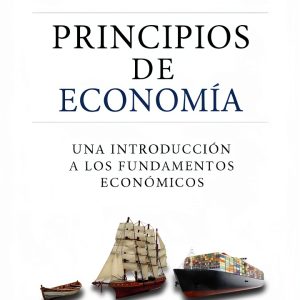




 Desarrollo Económico Kindle eBook Breakthrough Spanish 347p
Reviews
There are no reviews yet.